Optimising Payments & Transitioning from In-App Currency to Real Money

Evolving the Products Brand & Design System at an Early-Stage Startup 

Background

Vamp is a SaaS marketplace that connects brands with content creators, managing the journey from discovery and content approval to reporting and payments. Since launch, the platform relied on an in-app currency and an overlooked payment experience, leading to poor UX, low pricing transparency, and missed revenue opportunities.

Understanding the problem

To improve the experience, we focused on how brands interacted with the payment system. The goal was to identify where confusion and friction occurred in the process and how this was impacting their ability to manage and understand campaign payments.

Goals

Create a clearer, more transparent payment experience for brands while increasing revenue for the business.

Role

Lead Designer

Timeline

3 Weeks

Team

1 Designer, 2 Engineers,

1 Product Owner

SaaS Platform

Design Optimisation

B2B Platform

Web Design

Research
Processes, Plan and Findings

Research was limited due to a tight turnaround, so I had to be strategic about my approach. I couldn’t schedule calls with brands, as that would have extended the timeline.

  1. 23% of support tickets were caused by budget limit issues

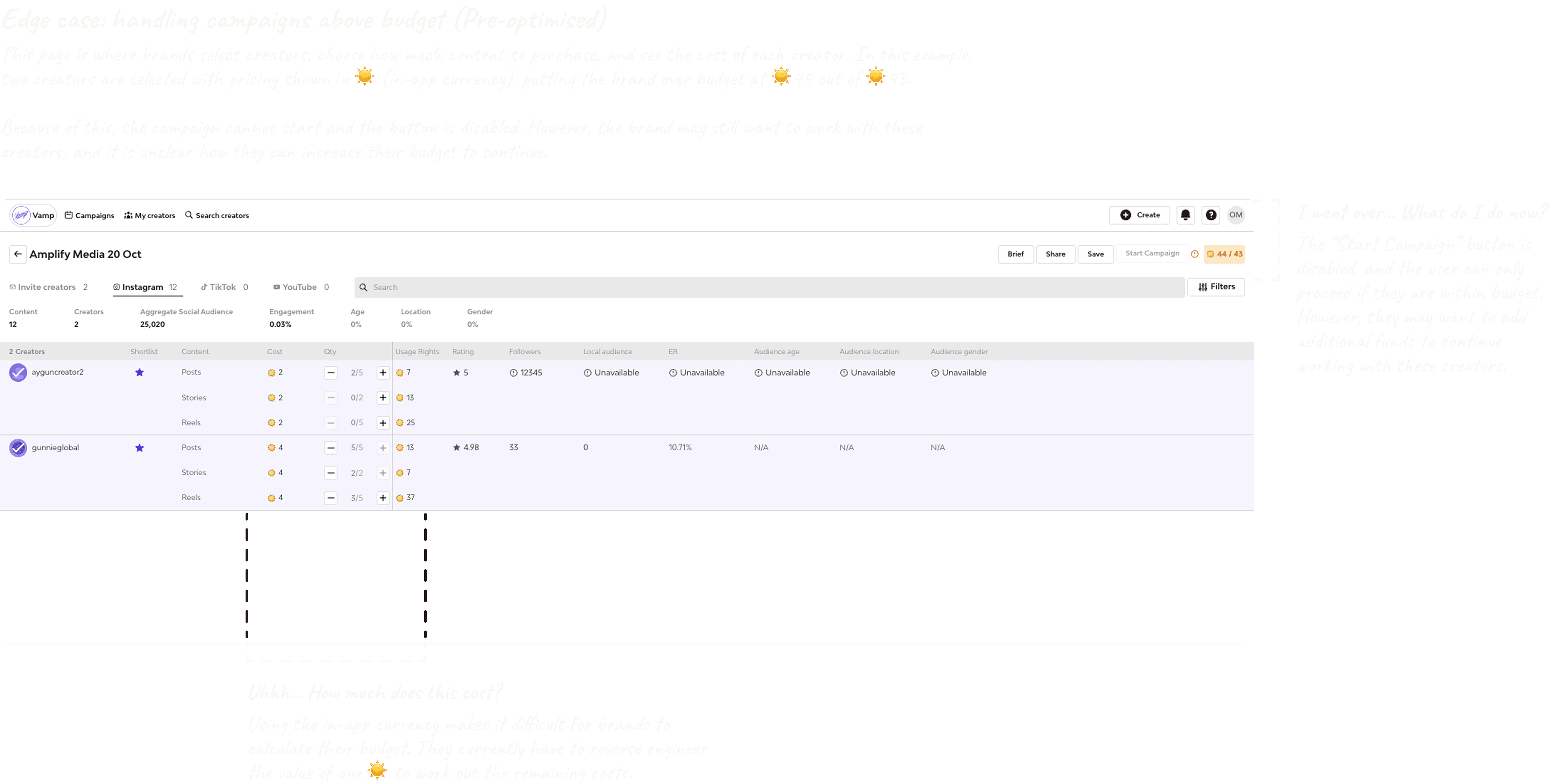
Reviewing Zendesk support tickets, I noticed a spike in volume. A common issue was brands hitting budget limits. To hire a creator above their budget, they had to submit a ticket for engineers to adjust funds.

  1. 15% of enterprise concerns were related to currency conversion

Users we spoke with relied on Google Maps, Apple Notes, and social media apps. However, we initially designed the product too similarly instead of creating a distinct visual identity.

  1. Engineers lose 25% of a workday adjusting campaign budgets

Finally, I met with stakeholders to share findings. The CTO wanted to reduce manual budget work, and the CEO supported switching to real-world currency for easier scalability.

Research
Processes, Plan and Findings

Research was limited due to a tight turnaround, so I had to be strategic about my approach. I couldn’t schedule calls with brands, as that would have extended the timeline.

  1. 23% of support tickets were caused by budget limit issues

Reviewing Zendesk support tickets, I noticed a spike in volume. A common issue was brands hitting budget limits. To hire a creator above their budget, they had to submit a ticket for engineers to adjust funds.

  1. 15% of enterprise concerns were related to currency conversion

Users we spoke with relied on Google Maps, Apple Notes, and social media apps. However, we initially designed the product too similarly instead of creating a distinct visual identity.

  1. Engineers lose 25% of a workday adjusting campaign budgets

Finally, I met with stakeholders to share findings. The CTO wanted to reduce manual budget work, and the CEO supported switching to real-world currency for easier scalability.

Research
Heuristic Review

With limited time and resources, this review guided the solution by examining the full journey from campaign creation to brand selection.


Key findings:

  1. Lack of transparency in price breakdown 

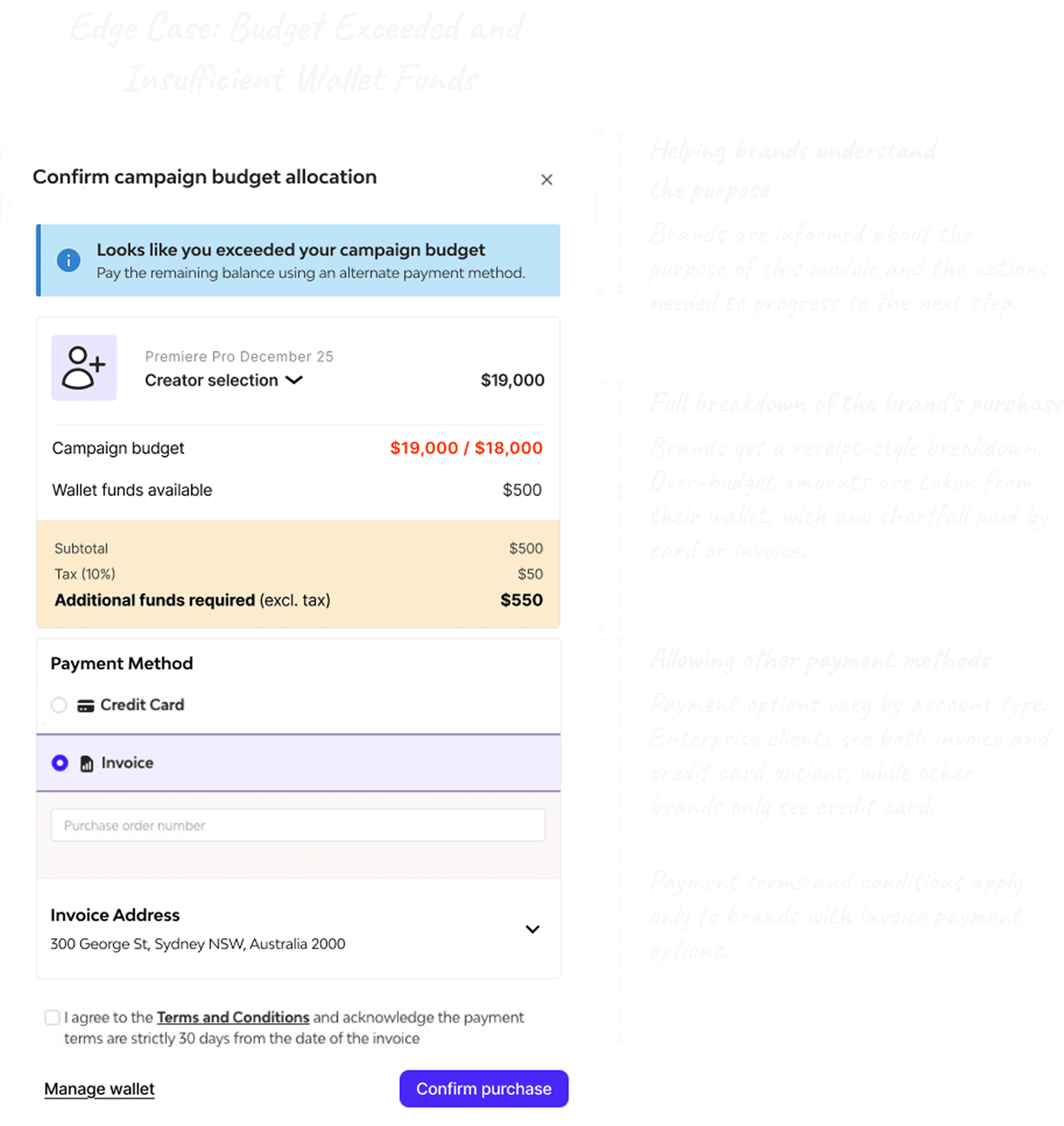
We hide fees and creator costs when converting budgets to in-app currency, and even in real-world currency, total costs and itemised fees remain unclear.

  1. Edge cases: Gaps in user guidance

One key improvement is edge case handling. Users encountering errors are not clearly informed what happened, why, or how to continue.

Research
Heuristic Review

With limited time and resources, this review guided the solution by examining the full journey from campaign creation to brand selection.


Key findings:

  1. Lack of transparency in price breakdown 

We hide fees and creator costs when converting budgets to in-app currency, and even in real-world currency, total costs and itemised fees remain unclear.

  1. Edge cases: Gaps in user guidance

One key improvement is edge case handling. Users encountering errors are not clearly informed what happened, why, or how to continue.

Solution
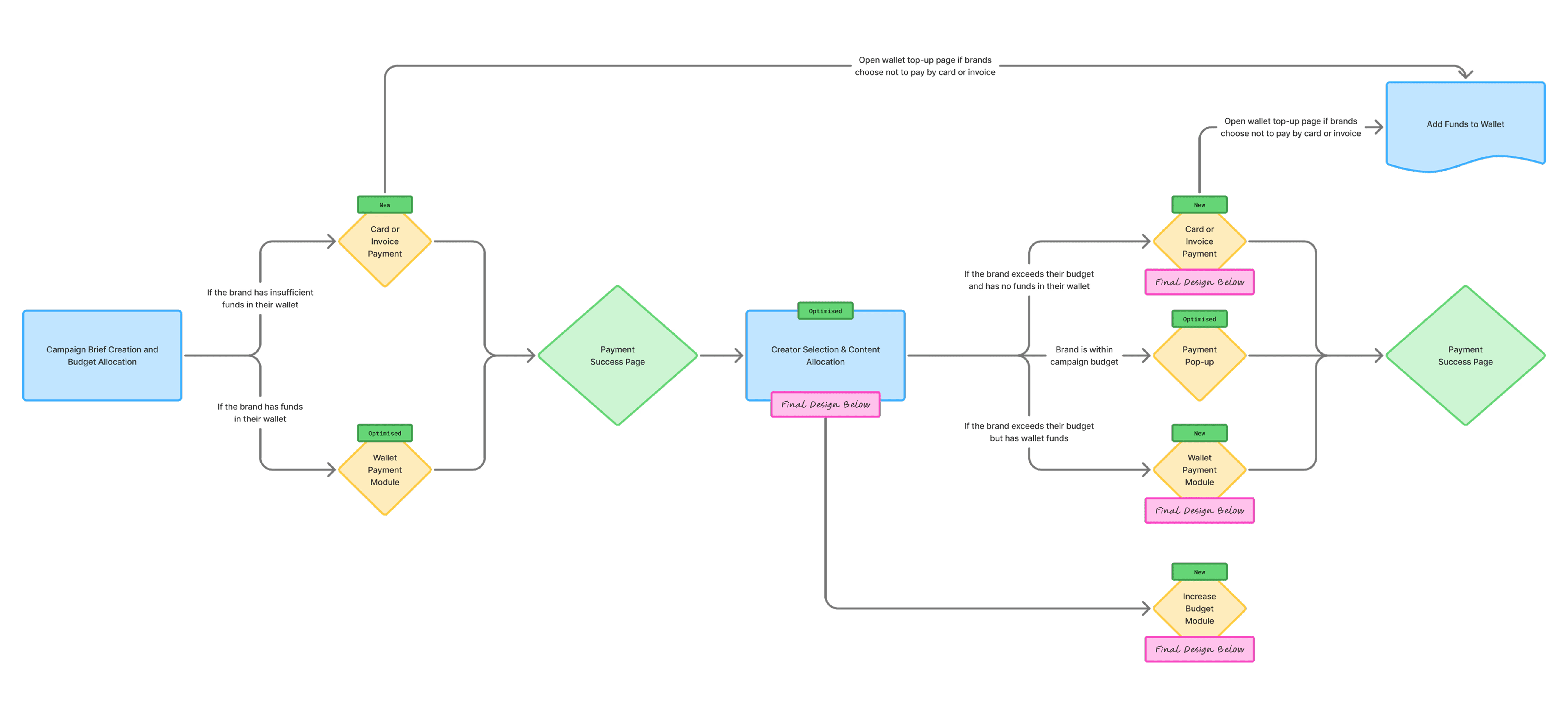
User Flow for Edge Cases & Designs

Handling edge cases was a key part of this project.

I mapped the user flow for scenarios where brands exceeded their campaign budget.

The goal was to help users understand what happened, why they could not proceed, and how to resolve it. The flows allowed users to increase their budget or adjust creator selections so they could continue their campaign.

Tooltip explanation

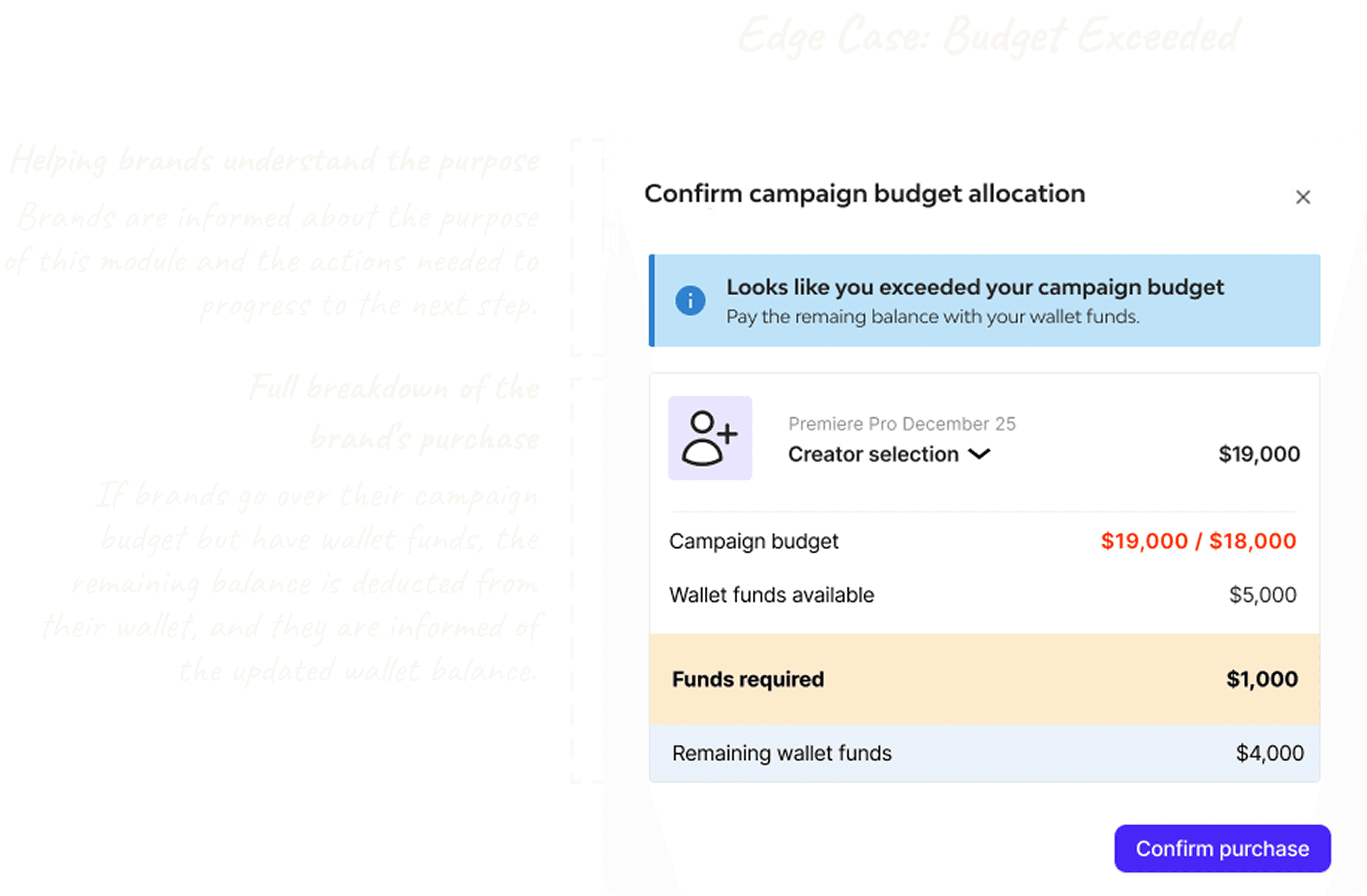
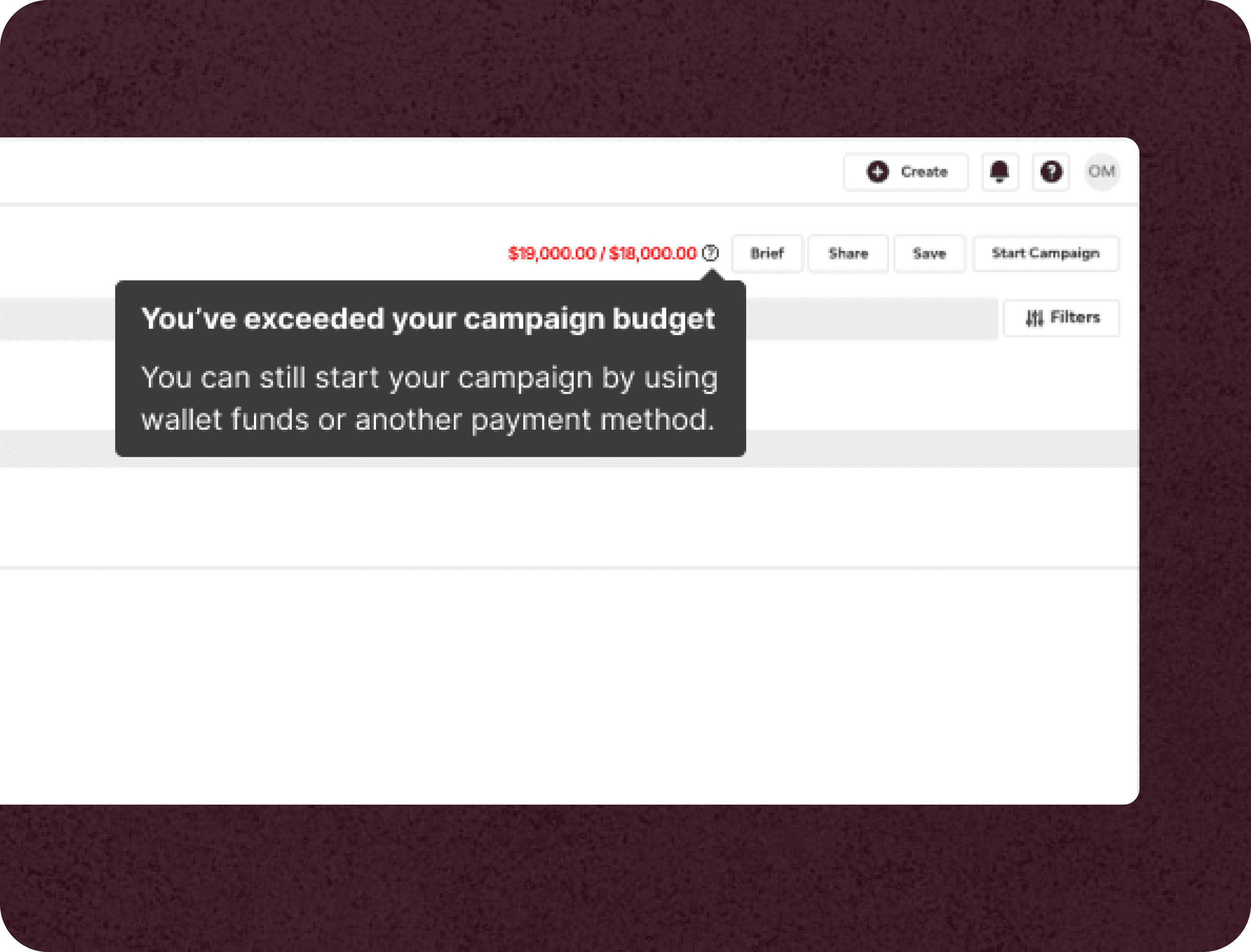
When brands exceed their budget, I designed a hover tooltip to explain what happens, and we now allow them to go over budget. This was a key change for the launch, ensuring brands had enough information to understand and act on the optimisation.

Increase budget anytime

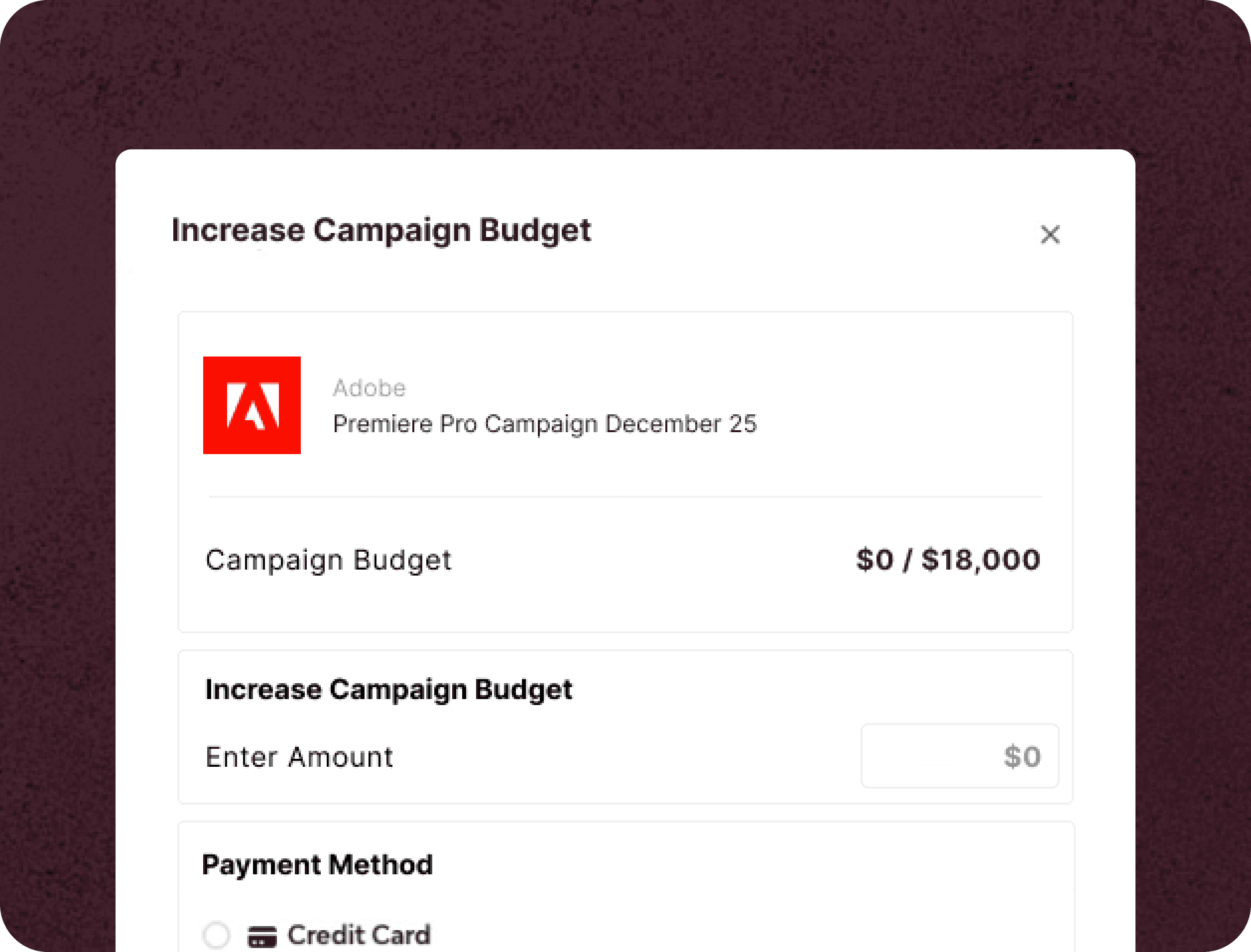
Brands no longer need to wait until a creator is confirmed to increase their campaign budget. They can adjust it anytime while the campaign is live. This gives brands more flexibility and, from a business perspective, creates opportunities for easy upselling.

Tooltip explanation

When brands exceed their budget, I designed a hover tooltip to explain what happens, and we now allow them to go over budget. This was a key change for the launch, ensuring brands had enough information to understand and act on the optimisation.

Increase budget anytime

Brands no longer need to wait until a creator is confirmed to increase their campaign budget. They can adjust it anytime while the campaign is live. This gives brands more flexibility and, from a business perspective, creates opportunities for easy upselling.

@2026 Command+Z is my best friend.