Evolving the Products Brand and Design System at an Early-Stage Startup
Evolving the Products Brand & Design System at an Early-Stage Startup
Background
As the sole designer at an early-stage startup, I led the launch of Appetite with a basic brand and no design system. Through rapid iteration, I evolved the brand and built a scalable system. This case study tells that story.
Understanding the problem
At launch, Appetite lacked a clear brand and design system, resulting in an inconsistent product that didn’t connect with users. Without a strong visual and interaction foundation, scaling the product risked slowing development, frustrating users, and weakening trust in the product.
Goals
Create a cohesive brand and scalable design system that connects with users and supports rapid product growth.
Role
Lead Designer
Timeline
Ongoing Project
Team
1 Designer, 1 Engineer, 1 Product Owner, 1 Illustrator
Consumer App
Mobile Design
Branding & Visual Design
Design Systems

Launch Fast
Engage Users, Iterate Quickly, and Relaunch Repeatedly
Before launch, the product owner and I researched competitors and interviewed pre-signup users.
In three months, we launched the Appetite app, a social platform for foodies. Moving fast caused UI inconsistencies, a weak visual identity, and no design system. Post-launch, results fell short, so we re-engaged with users to uncover key insights.
Understanding our users
A major gap was our limited understanding of users, which affected branding, UI, and visual identity. Post launch, we learned our users were 18 to 30 year old foodies, so the UI and brand needed to better connect with this group.
Stand out from competitors
Users we spoke with relied on Google Maps, Apple Notes, and social media apps. However, we initially designed the product too similarly instead of creating a distinct visual identity.
Did not build trust with users
The UI and design quality was poor. Early users said they would not trust the product with their data or to track places they had been or wanted to visit.
Below is the first version we launched in October 2023
Below is the first version we launched in
October 2023
Launch Fast
Engage Users, Iterate Quickly, and Relaunch Repeatedly
Before launch, the product owner and I researched competitors and interviewed pre-signup users.
In three months, we launched the Appetite app, a social platform for foodies. Moving fast caused UI inconsistencies, a weak visual identity, and no design system. Post-launch, results fell short, so we re-engaged with users to uncover key insights.
Understanding our users
A major gap was our limited understanding of users, which affected branding, UI, and visual identity. Post launch, we learned our users were 18 to 30 year old foodies, so the UI and brand needed to better connect with this group.
Stand out from competitors
Users we spoke with relied on Google Maps, Apple Notes, and social media apps. However, we initially designed the product too similarly instead of creating a distinct visual identity.
Did not build trust with users
The UI and design quality was poor. Early users said they would not trust the product with their data or to track places they had been or wanted to visit.
Below is the first version we launched in October 2023







Appetite app logo design November 2023
Research
Processes & Plan
We explored the digital products our users were using and those gaining traction in 2023-2024. This was more mood boarding than competitor analysis.
Findings:
Playful and comedic, inspired by Duolingo
Duolingo engaged users with characters, gamified design, and playful animations.
Adapting familiar TikTok interactions
We used swipe gestures and familiar UI patterns to make the product intuitive for our audience.
Pinterest attracting a younger demographic
Pinterest, launched in 2010, attracted Gen Z around 2022–2023 through visual discovery, trend-driven content, and interactive features like Idea Pins.
Research
Processes & Plan
We explored the digital products our users were using and those gaining traction in 2023-2024. This was more mood boarding than competitor analysis.
Findings:
Playful and comedic, inspired by Duolingo
Duolingo engaged users with characters, gamified design, and playful animations.
Adapting familiar TikTok interactions
We used swipe gestures and familiar UI patterns to make the product intuitive for our audience.
Pinterest attracting a younger demographic
Pinterest, launched in 2010, attracted Gen Z around 2022–2023 through visual discovery, trend-driven content, and interactive features like Idea Pins.
Appetite app logo design November 2023
Building Brand and Design System
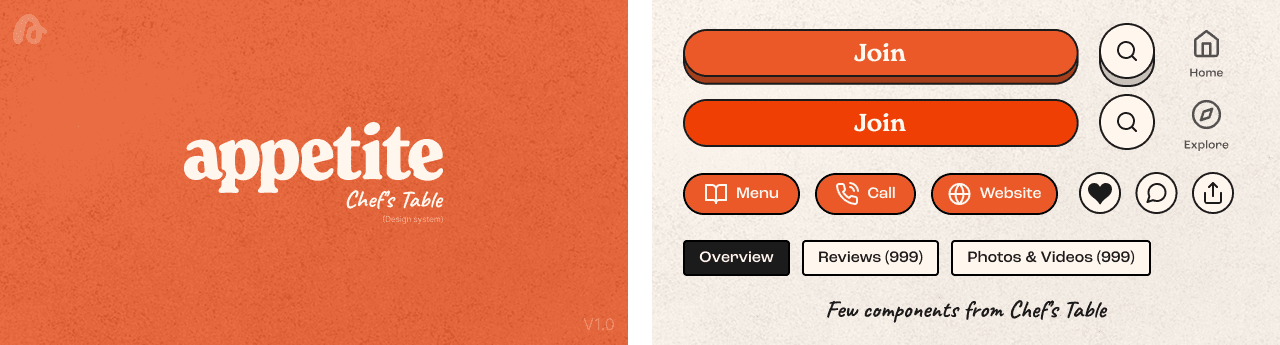
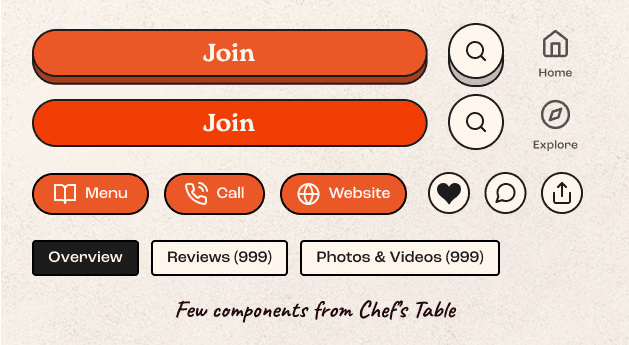
With a clearer understanding of our audience, we collaborated with an illustrator and marketing to build the brand, while I developed a scalable design system called ‘Chef’s Table’.
We iterated on the UI and released it in early 2024.
We iterated on the UI and released it in
early 2024.
Goals:
Scalable systems
As the sole designer, I focused on components needed for the project and scaled them as required.
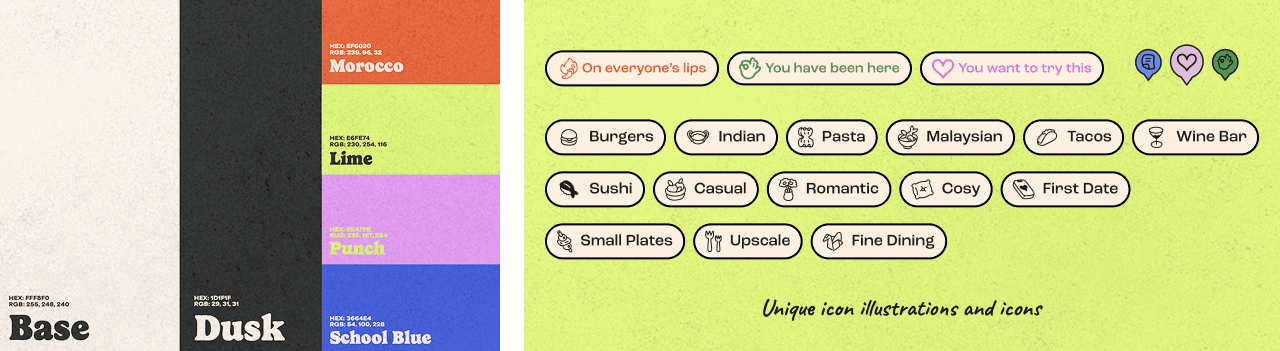
Create a distinct visual identity
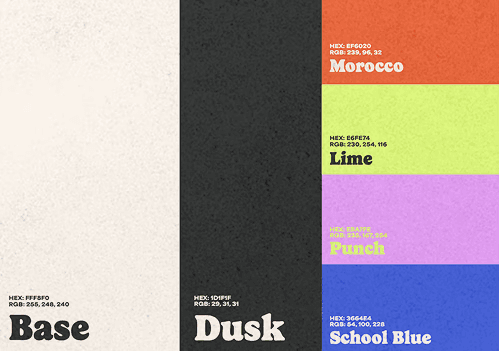
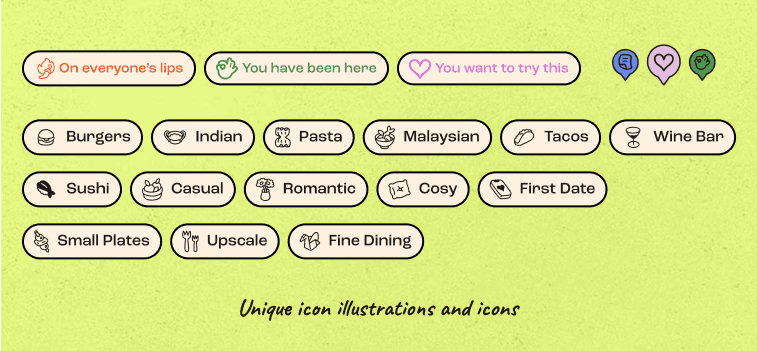
We avoided a typical app look, aiming for a playful game and magazine feel.
Animations and illustrations
We created characters and strong animations to hook users and deliver a unique experience.
Building Brand and Design System
With a clearer understanding of our audience, we collaborated with an illustrator and marketing to build the brand, while I developed a scalable design system called ‘Chef’s Table’.
We iterated on the UI and released it in early 2024.
Goals:
Scalable systems
As the sole designer, I focused on components needed for the project and scaled them as required.
Create a distinct visual identity
We avoided a typical app look, aiming for a playful game and magazine feel.
Animations and illustrations
We created characters and strong animations to hook users and deliver a unique experience.


Connecting through humour
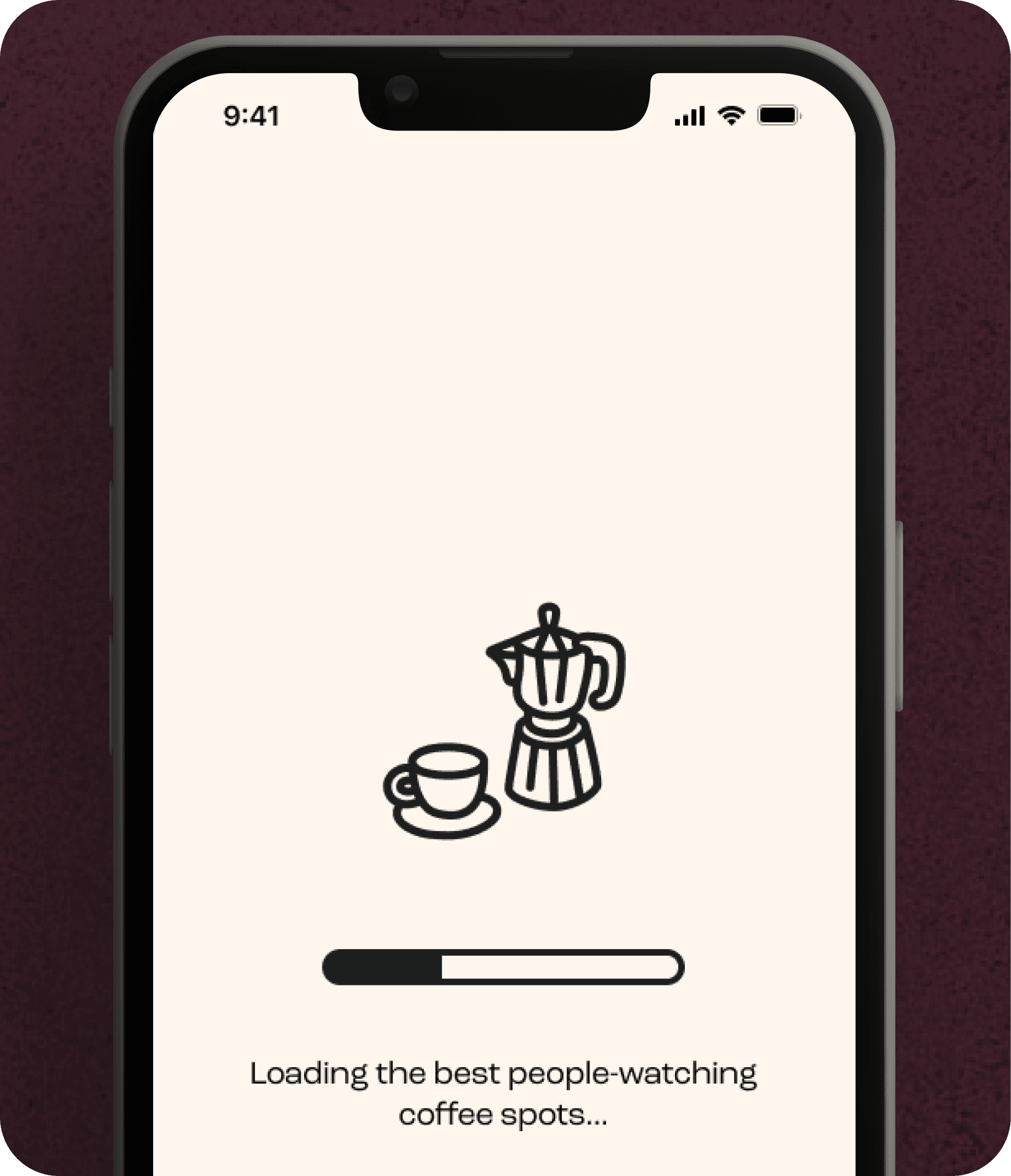
We replaced ‘Please enter your details’ with humorous UX writing, even adding playful loading screens to engage a younger audience.


Engaging animation transitions
Using the illustrator’s characters, I created animations in Rive. It was my first time using animation and the tool, but I was eager to learn.
Designed cards that stand out
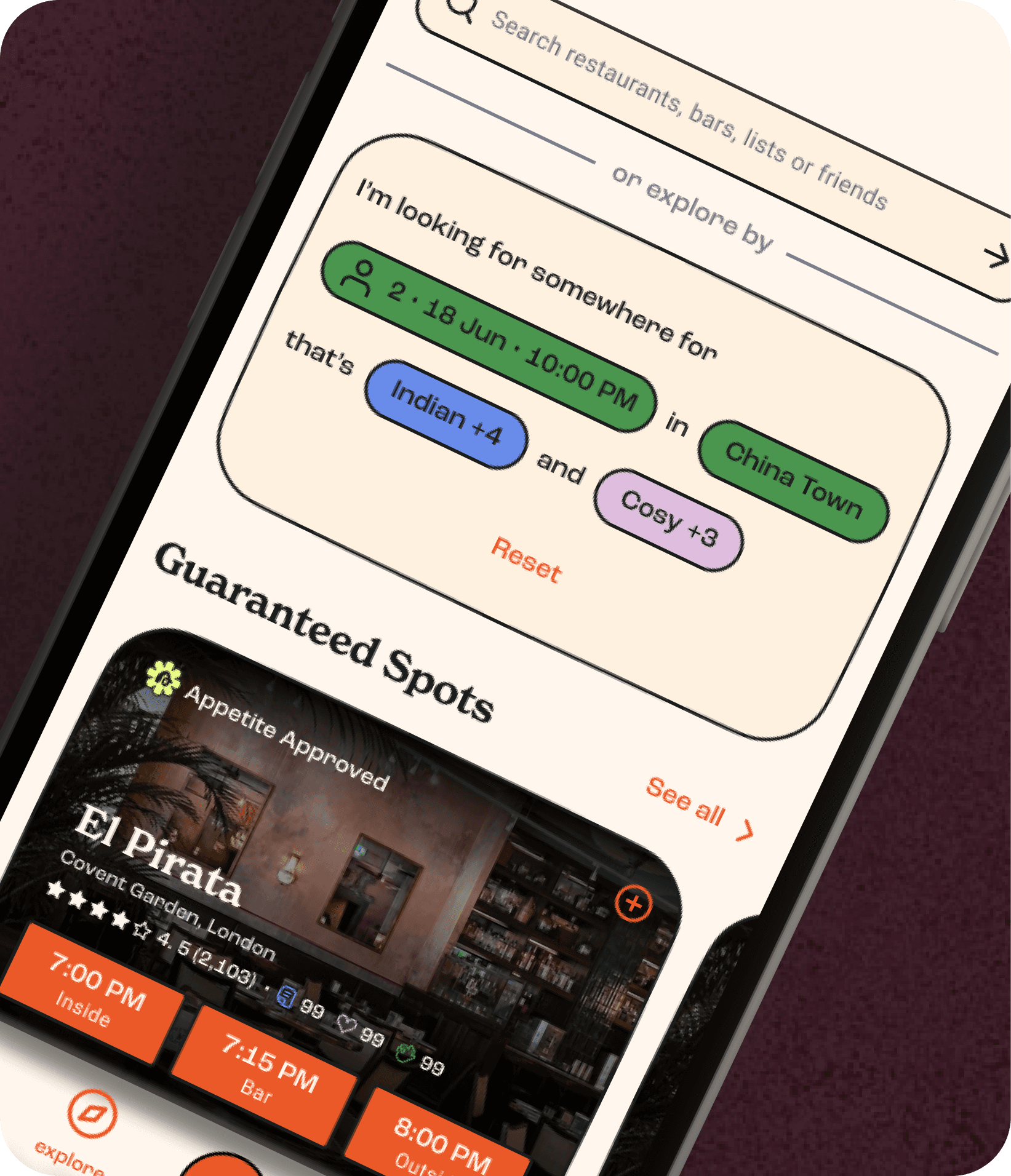
The engineers hated this one. Our cards had no straight edges, making it harder to build. But once it was added to the design system, development moved much faster.
Connecting through humour
We replaced ‘Please enter your details’ with humorous UX writing, even adding playful loading screens to engage a younger audience.
Engaging animation transitions
Using the illustrator’s characters, I created animations in Rive. It was my first time using animation and the tool, but I was eager to learn.
Designed cards that stand out
The engineers hated this one. Our cards had no straight edges, making it harder to build. But once it was added to the design system, development moved much faster.
Final Thoughts
Impact & Reflection
I joined this role full of self-doubt, with no startup or restaurant experience, coming from a large finance enterprise and moving to a completely new country. Despite that, I built the foundation of the brand and product systems that exist today. The design system I created allowed us to move quickly—testing, iterating, and delivering prototypes to users efficiently.
increasing traction with younger audiences
When we launched the latest designs and promoted them on social channels, user acquisition among 19–24 year olds increased by 47%
Accelerating with the design system
What used to take us two sprints to build and release now only takes one. Lengthy design handovers were mostly eliminated, focusing instead on logic, and design reviews were cut in half thanks to confidence in the robustness of the system.
OpenTable partnerships for younger audiences
Shortly after improving the UI and brand, OpenTable approached us for a partnership, providing their booking API to help connect with a younger audience. Article for the partnership
Shortly after improving the UI and brand, OpenTable approached us for a partnership, providing their booking API to help connect with a younger audience. Article for the partnership
Final Thoughts
Impact & Reflection
I joined this role full of self-doubt, with no startup or restaurant experience, coming from a large finance enterprise and moving to a completely new country. Despite that, I built the foundation of the brand and product systems that exist today. The design system I created allowed us to move quickly—testing, iterating, and delivering prototypes to users efficiently.
increasing traction with younger audiences
When we launched the latest designs and promoted them on social channels, user acquisition among 19–24 year olds increased by 47%
Accelerating with the design system
What used to take us two sprints to build and release now only takes one. Lengthy design handovers were mostly eliminated, focusing instead on logic, and design reviews were cut in half thanks to confidence in the robustness of the system.
OpenTable partnerships for younger audiences
Shortly after improving the UI and brand, OpenTable approached us for a partnership, providing their booking API to help connect with a younger audience. Article for the partnership
Final Thoughts
Impact & Reflection
I joined this role full of self-doubt, with no startup or restaurant experience, coming from a large finance enterprise and moving to a completely new country. Despite that, I built the foundation of the brand and product systems that exist today. The design system I created allowed us to move quickly—testing, iterating, and delivering prototypes to users efficiently.
increasing traction with younger audiences
When we launched the latest designs and promoted them on social channels, user acquisition among 19–24 year olds increased by 47%
Accelerating with the design system
What used to take us two sprints to build and release now only takes one. Lengthy design handovers were mostly eliminated, focusing instead on logic, and design reviews were cut in half thanks to confidence in the robustness of the system.
OpenTable partnerships for younger audiences
Shortly after improving the UI and brand, OpenTable approached us for a partnership, providing their booking API to help connect with a younger audience. Article for the partnership
@2026 Can you make it pop... but keep it minimal?